
Having looked at the undeniable fact that marketing is sometimes factually untrue from the outset in the previous article in this series, we will move to the more subtle issue of intentional deception. Outright lies are not rare, but unfortunately, misleading statements are everywhere.
Deceptive Ads: Uncommonly Common
Just this week I went to the grocery store for milk. As is not too uncommon, I took a detour to the snack row. There I saw a container of a favorite snack cracker. Being a lifetime dieter, I was delighted to see one package labeled “New” on one corner and “50% Less Fat” on the other.
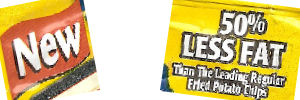
Naturally, I assumed for a moment that here was a new version of this snack that had only half as much fat as the regular version. As jaded as I have become as a result of my studies of misleading advertising, however, I was still taken aback a bit when I read the fine print!
The snack crackers in this container were not stated to be less fat than their regular crackers. They just had 50% less fat than potato chips! Well, a serving might have less fat than a McDonald’s Big Mac or a Wendy’s frosty, too, but what does that have to do with snack crackers!
Deceptive Advertising Is Amazing
It amazes me that a major company would even dare to use such misleading ads. But when I showed it to my wife she shrugged it off. “Why the surprise”, she asked. “I see that kind of stuff all the time.”
It is difficult for me to believe that people so readily accept the idea that obviously deceptive advertising is just an ordinary part of marketing products in the world today.
It should be so intolerable and people’s reaction so negative that no one would dare do it. Obviously that is not the way it is and we must deal with our world as it is, deceptive advertising included, not as we think it should be.
Apples and Oranges
The fact is, the representations in this misleading advertisement is like comparing apples and oranges, as the old expression goes. And they mean nothing in truth. But they are clearly meant to suggest something false.
EXAMPLE:
If I were to write an ebook called How to Pay Less Taxes and then continue in very small print than Bill Gates, people who bought the book without reading the small print would be reasonably furious. Why? Because their taxes and Bill Gates’ taxes are presumably not comparable.
I wouldn’t do it. You wouldn’t do it. But a lot of marketers do.
The problem is, even when buying the crackers people will often assume that the ad does point to a real value, in this case of less fat, that might still have some validity. However, this is a misguided assumption.
Learn About Misleading Ads
What we need to learn to do is to recognize language that may be deceptive. Learn to decipher it and examine it in the light of facts rather than implications. This is important, because the unfortunate truth is that the marketing of financial products is no different than the marketing of crackers.
Every day we get offers from banks and other financial institutions with offers of various kinds. Most of the marketing of financial products I see contain deceptive advertising. It is sad, but it is the nature of the real world.
Here is the point, a rather obvious one but one we need to take seriously. When we receive advertising about a product we have an interest in learning about we need to do some critical thinking to determine the real facts in what we are reading and watch carefully for misleading statements.
If a bank advertises that their CD’s pay twice as much as their competitors pay, ask which competitors, twice as much as the other’s CD’s or twice as much as their savings accounts (a common reference), twice as much as all of their competitors or just some of them? There is often a lot of qualifying small print that completely changes the values being represented.
Dealing With Deceptive Advertising
To be successful with money, it is essential to learn how to think critically when evaluating all financial matters. Learn to recognize deceptive advertising.
Do not fall for misleading ads. Misleading advertising depends on our negligent thinking. So think. Uncover the real facts and benefit positively from all your financial decisions.